Skip to content

Trenchless sewer, drain and storm pipe lining nationwide · Open 24/7

(855) 804-1434

Sewer Pipe Lining Sewer Pipe Lining — Sewer, drain and storm pipe lining across the United States

Sewer, drain and storm pipe · Nationwide · Open 24/7

Sewer Pipe LiningA new pipe inside the old one

The failing pipe stays in the ground. A resin-saturated liner goes in through a cleanout or a manhole, hardens against the old wall, and becomes a seamless pipe with no joints for roots to find. The slab, the yard, the parking lot and the street are left exactly as they were, and most houses are done in a day.

Estimates are free. Call now. Open 24 hours, 7 days a week.

2012
Helping property owners online since
1 Day
Typical residential lining job
50 Yr
Rated service life of a cured liner
28
States with a lining guide

Where are you?

Lining guides for 28 states

What is in the ground, who owns the pipe under the street, and whether a verified installer is listed.

All 28 states →

Estimates are free. Call now. (855) 804-1434

No installer in your state yet? The national line locates one for you, free.

The short version

What sewer pipe lining is, and what it is not

Every buried pipe eventually does one of three things: it leaks at the joints, it loses its shape, or it collapses. Lining is the answer to the first. A tube of felt or fiberglass is wetted out with resin, pulled or inverted into the existing sewer, drain or storm line, inflated so it presses against the old wall, and cured in place with hot water, steam or ultraviolet light until it is a rigid pipe of its own. The clay, cast iron, concrete, Orangeburg or corrugated metal that was there before becomes a mold and nothing more. Roots lose the joints they were growing through, groundwater loses the cracks it was pouring in through, and the rough, scaled interior that was catching grease and paper is replaced by a smooth one.

Lining is not a cure for geometry. A liner copies the pipe it cures in, so a sag that holds water before lining holds water after; a section crushed by a driveway or sheared by moving ground cannot be passed at all. Those lines need pipe bursting, which pulls a new polyethylene pipe through the old route, or a sectional dig where nothing else will work. And a single bad joint in an otherwise sound run does not need a full liner; a short sleeve cured over that one spot fixes it for a fraction of the cost. Which of these applies is decided by one thing, and it is not a price sheet: a camera inspection of the actual pipe, recorded, with every defect located from the surface.

This site exists to explain those choices plainly, for a homeowner with a backup, a property manager with a restaurant row, or a public works director with a culvert, and to connect you with an installer who has been checked out before the listing went up.

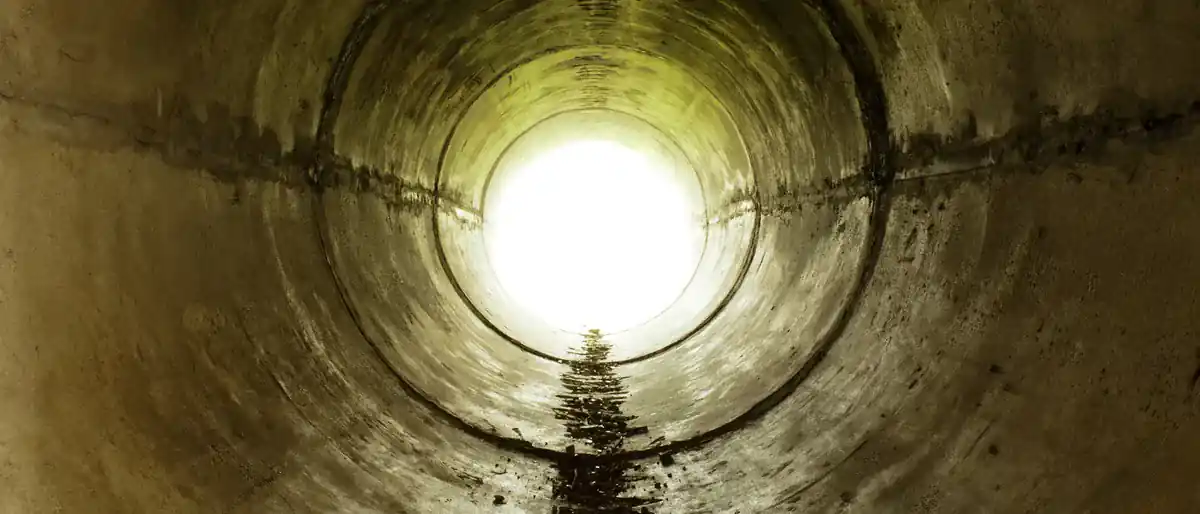
How a failing line announces itself

  • Several drains slowing down at once, rather than one stubborn sink
  • Water rising in a tub, a floor drain or a parking-lot catch basin when something else runs or when it rains
  • Roots on the cable every visit, and the visits getting closer together
  • A soft or sunken strip of ground along the pipe's route, or pavement settling over it
  • A sewer smell at a cleanout, in a crawl space or in a planter bed
  • A real estate sewer scope, or a utility's inflow-and-infiltration test, that found cracks, offsets or Orangeburg
  • A storm pipe or culvert with the road or lot above it sinking
What a camera inspection shows

2012

Helping property owners online since

1 Day

Typical residential lining job

50 Yr

Rated service life of a cured liner

28

States with a lining guide

See the method

Four minutes inside a sewer being relined

If you have never watched a liner go in, this is the whole job in miniature: resin worked into the felt tube, the tube fed into the old pipe, air pressure pressing it to the wall, the cure, and the camera pass that shows a smooth new interior where the cracked clay used to be.

CIPP Cured In Place Pipe — Trenchless Sewer Pipe Lining Technology CIPP Cured In Place Pipe — Trenchless Sewer Pipe Lining Technology Watch a liner go in, start to finish — about four minutes.
CIPP Verified Installer badge CIPP Verified Installer Installers listed on this site are prequalified through the CIPP Verified Installer program at curedinplacepipe.net: at least five years in business, a 4.5-star or better Google rating, and vetting of licensing, completed work and lining equipment before a listing goes live. What verification means →

Installers listed on this site have been through that prequalification. Where a state has no listed installer yet, the national line finds a qualified trenchless contractor for you and makes the introduction at no charge; that contractor is then screened the same way.

Trenchless methods

Three ways to fix a failed pipe without digging it up

Each one solves a different problem. The camera footage decides which applies to your line — not a price sheet.

Sewer Pipe Lining (CIPP)

A resin-saturated liner cured inside the old sewer becomes a jointless new pipe, installed from a cleanout or manhole with nothing dug up.

Best for
Root-filled clay joints, scaled cast iron under a slab, cracked concrete or Orangeburg that still holds its shape, and any line under hardscape, a building or a mature tree.
Not for
Bellies, lost slope, crushed pipe or large offsets. A liner takes the shape it cures in.
Timeline
Usually one day for a house lateral; days to weeks for a building or a municipal reach
How Sewer Pipe Lining (CIPP) works →

Pipe Bursting

A bursting head splits the old pipe underground and pulls a new fused polyethylene line in behind it, between two small pits.

Best for
Crushed, deformed or collapsed pipe, severe offsets, undersized lines that need a larger diameter, and Orangeburg that has gone oval.
Not for
Lines with a belly that must be regraded, pipe wrapped in utilities or encased in concrete, and runs where a pit cannot be opened at each end.
Timeline
One to two days for a house lateral
How Pipe Bursting works →

Sectional Point Repair

A short liner, two to twelve feet long, cured over one defect, leaving the sound pipe on either side alone.

Best for
One cracked joint, one offset, one root intrusion or one leaking connection in an otherwise sound line.
Not for
Pipe with defects every few feet, lost slope, or a collapse the sleeve cannot pass.
Timeline
A few hours per repair
How Sectional Point Repair works →

What is in the ground

The pipe follows the decade the building was built

Anything plumbed before the Second World War drains through vitrified clay laid in short lengths with a joint every two or three feet, and the joints are where roots get in. Houses and buildings from the 1940s through the early 1970s run cast iron under the floor and clay, concrete or Orangeburg fiber pipe to the street; cast iron scales and rusts through along the bottom, and Orangeburg, a tar-impregnated paper pipe, simply goes oval and collapses at about fifty years. From the mid-1970s on, laterals are PVC or ABS, which does not rot but cracks at a fitting or sags into a belly wherever the ground moves. Storm pipe adds corrugated metal, which rusts through at the invert, and concrete, which opens at the joints.

The ground decides the rest. Expansive clay in Texas, Colorado, Mississippi and the Piedmont bends pipe into bellies; sand and a shallow water table in Florida, the Gulf Coast and the Atlantic shore wash into open joints; frost four and five feet deep across the northern tier puts laterals at the bottom of trenches nobody wants to dig; ledge in New England and the Mid-Atlantic turns a trench into a blasting job; karst in Florida, Tennessee, Missouri and Pennsylvania drops pipe into voids. Each state guide covers what that means for the pipe under your property and whose pipe it is once it crosses the sidewalk.

How a job runs

Camera first. Always.

A sewer quote given without video is a guess, and guesses are how homeowners end up paying for a liner that was never going to fix the problem. Here's the sequence we follow on every job.

  1. Step 1

    Camera inspection, recorded

    A self-leveling camera runs the full line from the cleanout, manhole or roof drain to the main. Every crack, offset, root mass, belly and connection is logged with its distance, and a locator marks each one on the surface with its depth. You get the recording.

  2. Step 2

    Cleaning to bare wall

    A hydro jetter, with chain cutters or a descaler where cast iron or roots call for them, strips the pipe to its original surface. The camera goes through again afterward, because a cleaned pipe tells the truth about its condition in a way a dirty one cannot.

  3. Step 3

    A written scope, with the alternatives

    The scope names the method, the footage and diameter involved, the price, the permits and inspections that apply, and the reasons the other methods were set aside. When the right answer is a dig, the scope says so.

  4. Step 4

    Permits and notifications

    The installer pulls the plumbing permit, any right-of-way or sewer-authority permit, schedules the inspections the local authority requires and files the utility-locate ticket before anything is opened.

  5. Step 5

    The work, usually in a day

    A residential liner typically cures in a few hours; bursting a lateral takes a day or two; a building or municipal reach is phased so no one loses their drains for more than a night. Branch lines are reinstated with a robotic cutter.

  6. Step 6

    Final video, with you watching

    The camera goes back through the finished pipe. You see the new interior end to end, and the recording goes in your file along with the warranty and the permit sign-offs.

Questions

The questions that come up first

How long a liner lasts, whether Orangeburg can be lined, what a lateral costs, whose pipe it is under the street and when lining is the wrong answer. Short answers here, longer ones on the FAQ page.

See every question
What is sewer pipe lining?

Sewer pipe lining, usually meaning cured-in-place pipe or CIPP, builds a new pipe inside the old one. A flexible tube saturated with resin is fed into the existing sewer through a cleanout or manhole, pressed against the pipe wall with air or water, and cured until it hardens into a continuous, jointless pipe. The old clay, cast iron, concrete or Orangeburg stays in the ground as a mold; the liner carries the flow from then on.

How long does a cured-in-place liner last?

Liner manufacturers rate their products for a 50-year design life, and the earliest CIPP installations from the 1970s are still in service. Installer warranties vary; many residential installers warranty their lining work for 10 to 25 years. The warranty that counts is the written one delivered with the job, not a figure on a website.

Will lining fix a belly or a sag in the pipe?

No. A liner takes the exact shape of the pipe it cures in, so a low spot that holds water before lining holds water after. A belly, reverse slope or a crushed section needs pipe bursting, a sectional dig or an open-cut replacement. A reputable installer will show you the belly on camera and say so before quoting.

Can Orangeburg pipe be lined?

Often, yes. Orangeburg, the bituminized fiber pipe used in many subdivisions from the 1940s to the early 1970s, can carry a liner as long as it still holds a round shape. Experienced installers have lined thousands of feet of it. Once it has gone oval or blistered inward, the tube cannot be inverted through it and bursting or replacement takes over.

How much does sewer pipe lining cost?

Residential lining is priced by the foot and typically runs from the low hundreds of dollars per foot for a straightforward 4-inch lateral to considerably more where the line is deep, long, has multiple branches to reinstate or requires a pit for access. A full house lateral commonly lands in the mid four figures to low five figures. The comparison that matters is against the alternative: an open trench through a slab, a driveway or a street carries restoration, permit and traffic-control costs the liner avoids. Nobody can price a line responsibly without a camera inspection.

How long does the job take?

Most residential laterals are lined in a single day: cleaning in the morning, liner in and curing by early afternoon, branch reinstatement and the final video before the crew leaves. Pipe bursting a lateral usually takes one to two days because two pits have to be opened and closed. A commercial building or a municipal reach is scheduled in sections so service is interrupted for hours, not days.

Free Estimates

Find out what's actually wrong with your sewer line.

Tell us what's happening and where the property is. We match you with a qualified trenchless contractor near you, at no charge, and you get a camera inspection, a written finding and a straight recommendation — including when trenchless is not the right answer.

Estimates are free. Call now. (855) 804-1434
  • ✓ Camera inspection before any quote — no guessing
  • ✓ Most residential lining jobs finished in one day
  • ✓ Installers prequalified: 5+ years in business, 4.5-star Google rating or better
  • ✓ Sewer, drain and storm lines; homes, buildings and municipalities

Request a free estimate

We will contact you within 24 hours. In a hurry? Call now.

Form not connected yet. Add the Web3Forms access key to src/_data/site.json under form.accessKey and rebuild. Until then the form is hidden rather than shown broken, so no enquiry is silently lost.

Call (855) 804-1434 in the meantime.